This is my first time publishing a cover of a theme composed by Vangelis, the great master of symphonic-electronic music. The Blade Runner End Titles is one of those pieces that defined an era of synthesizer music, and recreating it was both a personal tribute and a deep dive into vintage synth programming using Arturia virtual instruments.
On the Complexity of the Theme
It's obvious that this isn't the most complex musical theme, but it is fantastic and majestic. It was a challenge because of how much I respect the work of Vangelis, though not so much for the sonority since I feel very comfortable programming synthesizers — and in this case, the goal wasn't to match every sound identically but to honor the spirit of the original.
The base chord progression is very simple, with only four chords: Cm, Gm, Dm dim, and Fm. Of course there are small variations. The main melody is quite simple as well, but that's where the essence of the composer — Vangelis — truly lives.
The Beauty of Virtual Synthesizers
Every artist who cultivates a love for electronic music enjoys spending hours in front of synthesizer panels because the possibilities are often endless. In my case, I don't have access to physical synthesizers — only virtual ones — but I work with what I believe is just and necessary. Everything else lies in imagination and the search for how to achieve the sound you have in mind.
It's true that electronic music has a more or less defined foundation of waveforms, but there are infinite combinations and results when you start combining filters and modulators.
Bass Line: Played, Not Sequenced
As you can see in the video, I didn't use an arpeggiator for the bass. I recorded the bass line by playing it live, then edited it to create the loop and adjust the note durations. The duration of each note determines the groove because of the silences between them — a very important detail.
Blade Runner End Titles – Synth Recording Session (Played by Hand)
A clip from my recording session for the Blade Runner End Titles cover. A key detail of this production: I played the synth lines by hand — no automatic arpeggiator. Every note was performed manually to give the parts a more organic, human feel. I started recording in June 2017 and returned in October 2018 to finish editing and add extra elements using Arturia virtual instruments.

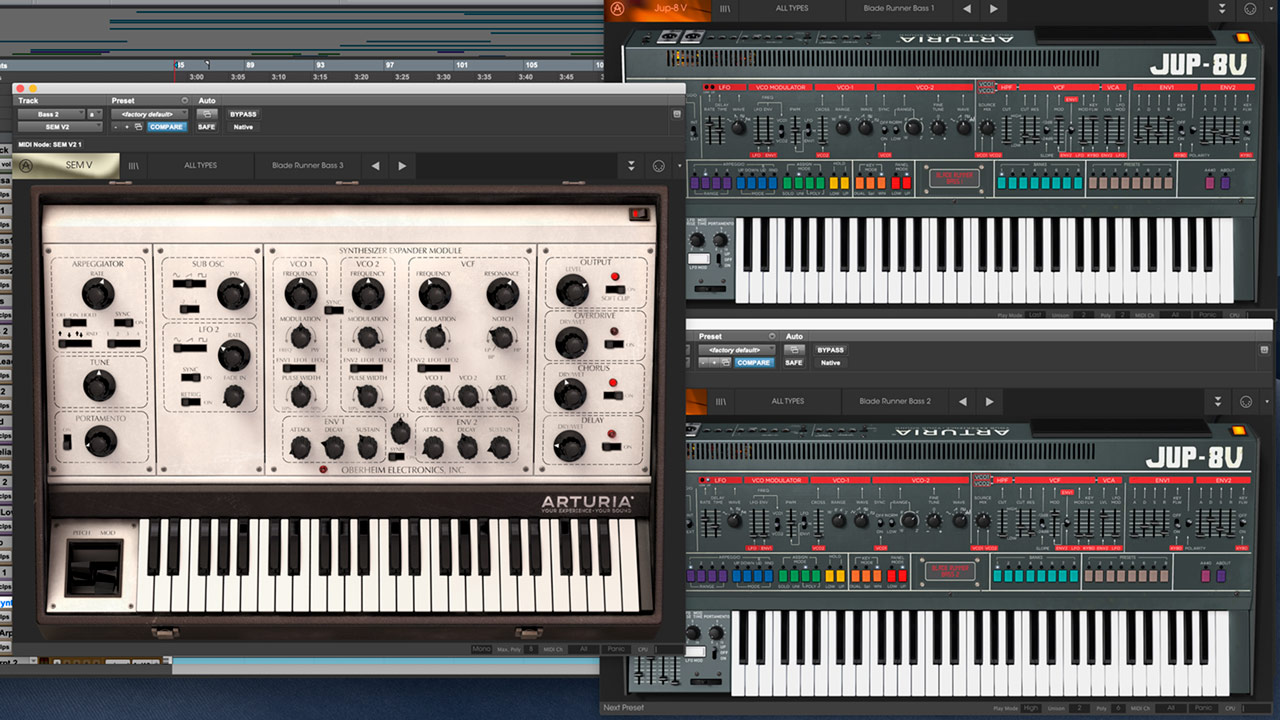
I used 3 synthesizers for the bass: SEM V and JUP-8V twice with different patches.
Electronic Drums: Blending Classic and Modern
This was the next step I considered important before continuing to add instruments. Deciding the drum sound was fairly straightforward: something between the original theme and a more updated feel, but not completely modern.
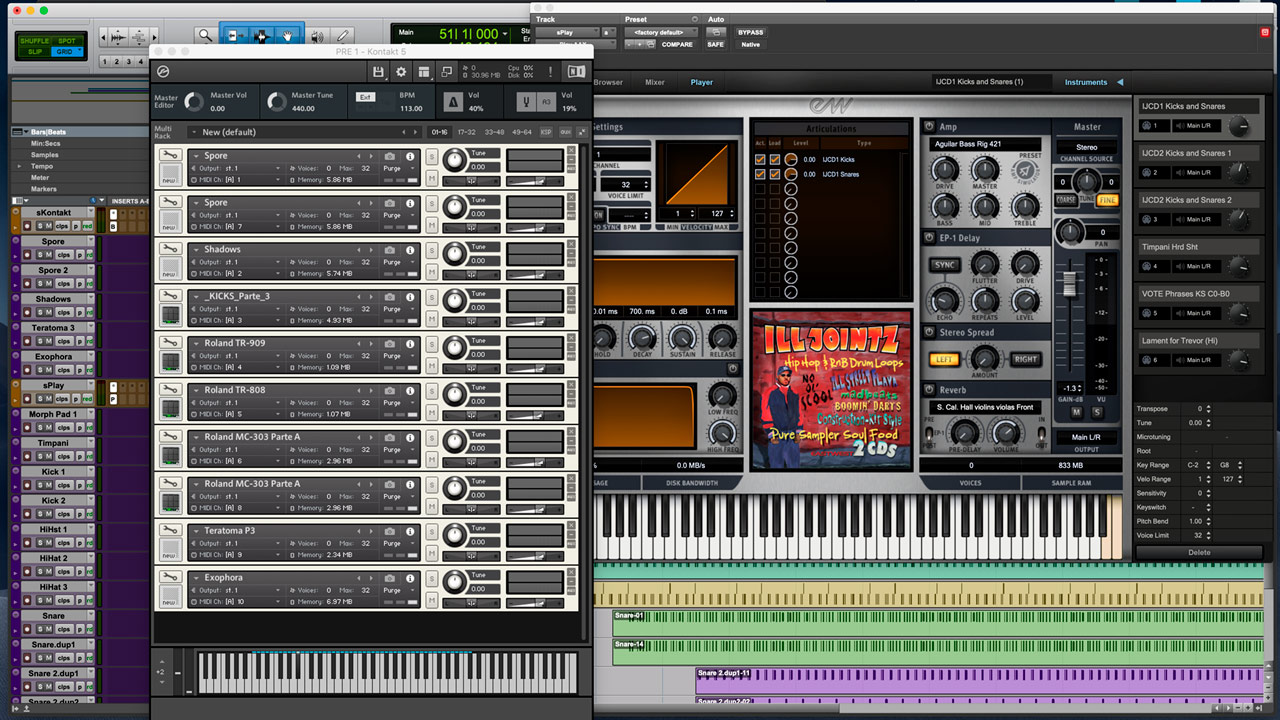
For the hi-hats, I used samples from Roland drum machines: TR-909, TR-808, and MC-303 with certain tone adjustments. I stayed close to the original arrangement while adding variations to get the result I liked.
I played the kicks and snares with samples from the Ill Jointz pack by EastWest. Two different kick sounds and seven different snares. One kick is heard throughout the song with a soft, 808-like sonority. The second kick has much more attack and greater body in the mid frequencies. I arranged the snares in a slightly more complex pattern and brought them close to the accents of the original drum part with my own variations.
Kicks and Snares from the Ill Jointz sound collection by EastWest. Hi-Hats from Roland sample packs: TR-909, TR-808, and MC-303.
Sound Effects: Glitch Machines
For this cover I used several samples from Glitch Machines libraries with some editing. It's important to be careful not to overuse these kinds of effects — they should enhance the atmosphere without overwhelming the mix.
Pads and Synth Lines
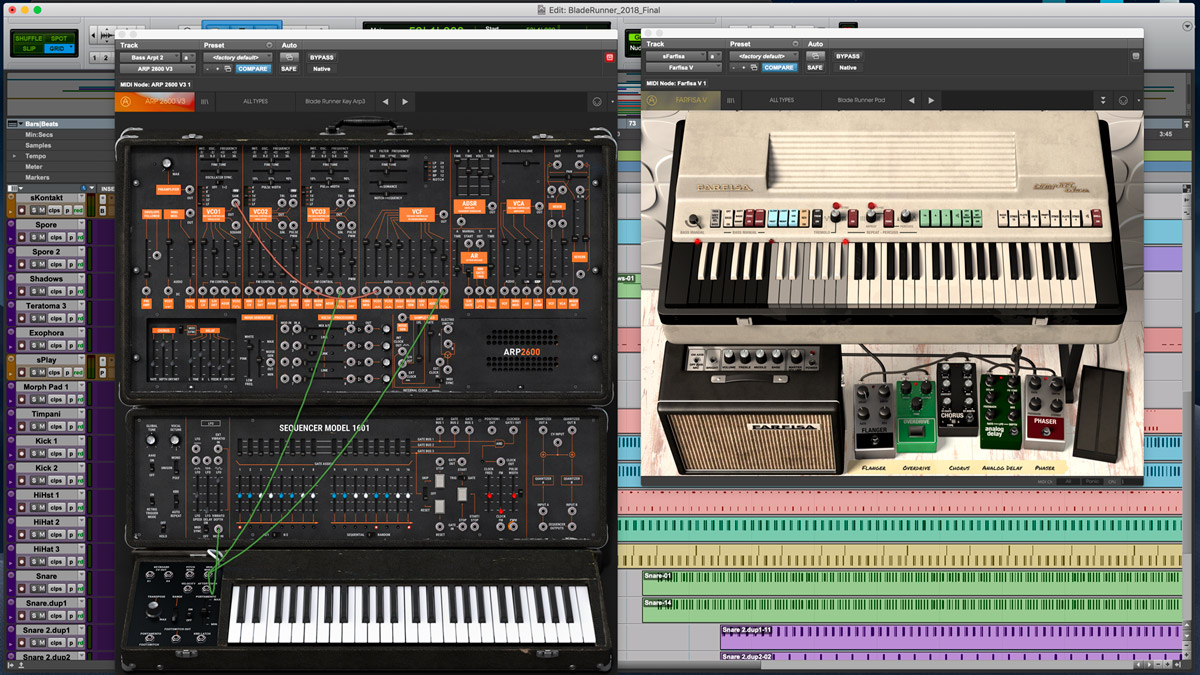
I wanted to add that taste of vintage synths, so I turned to the Farfisa V by Arturia and shaped the pad until I got the sound I was looking for.
You can also hear another synth playing the same notes as the bass but with an inversion. I didn't want to use an arpeggiator for this because I wanted to play the line manually throughout the track, giving it a more organic feel.
Farfisa V for pads, and ARP 2600 V3 for synth lines. I recorded manual panning automation for the synth lines.
Arpeggiators: The Heart of the Electronic Sound
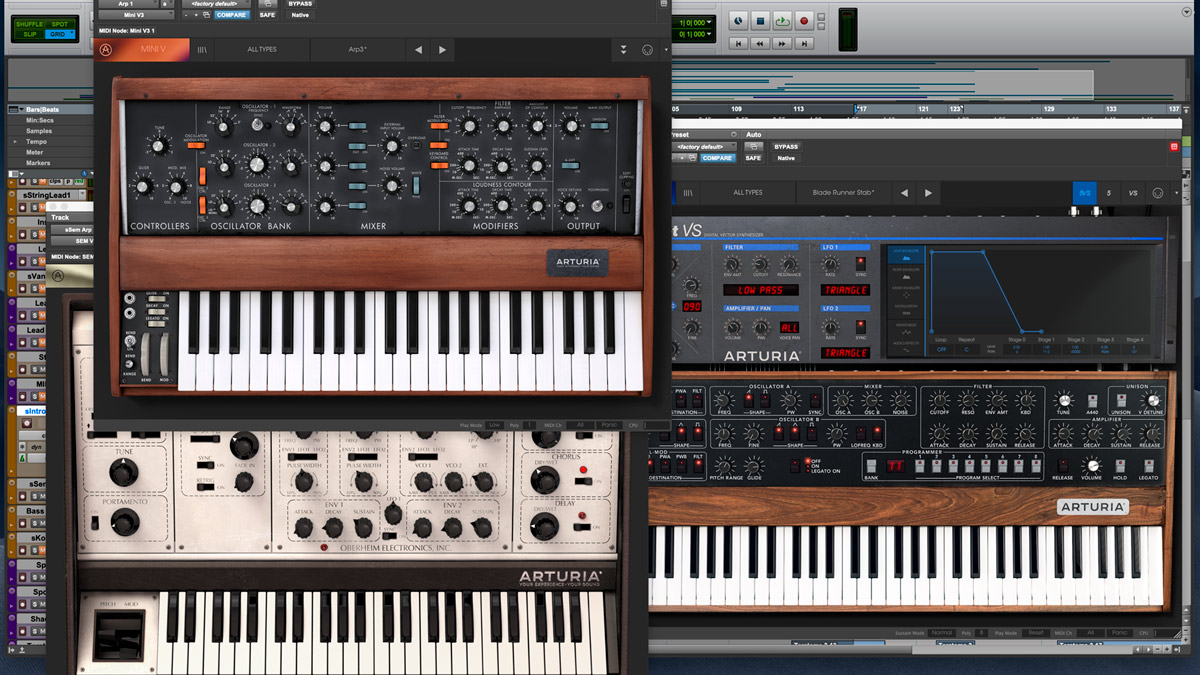
Maybe you thought that because I didn't use arpeggiators for the bass or the synth lines, I didn't like them — but the truth is I really love them. And this song simply couldn't exist without a couple of good arpeggiators.
I used the SEM V, the MINI V, and the Prophet V with their arpeggiator functions. With those three, I managed to reach exactly what I had in mind, and I was very happy with the result.
Arpeggiators from: SEM V, MINI V, and Prophet V.
Lead Synths: The Melody and the Solo
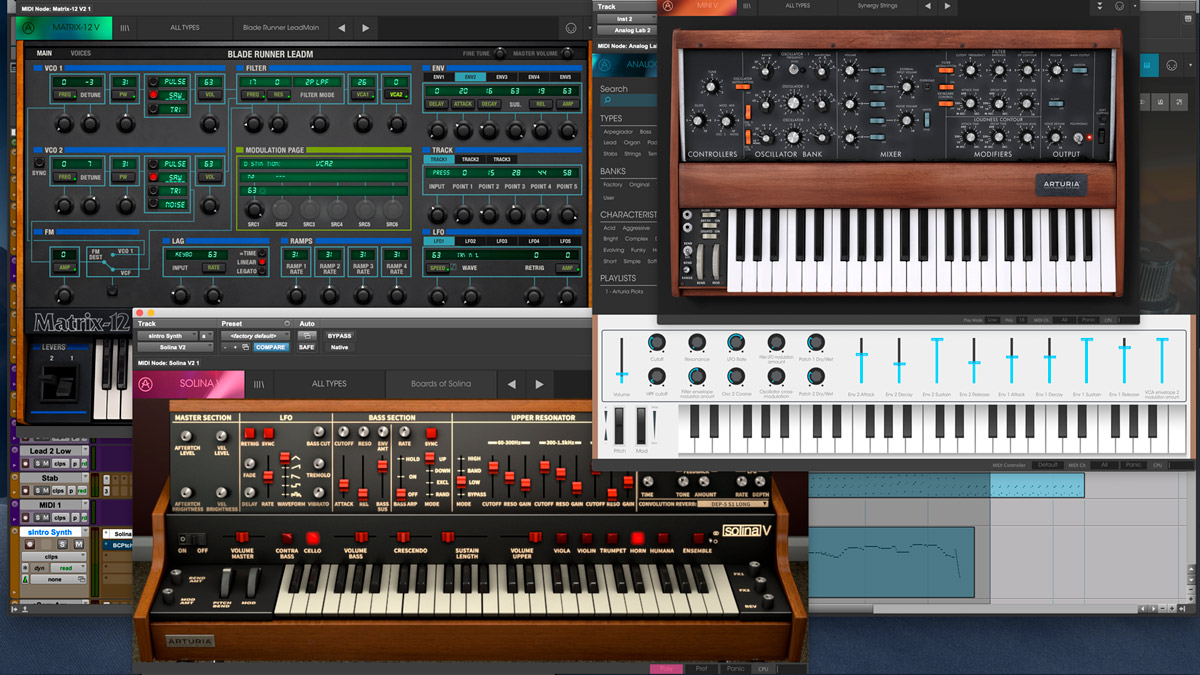
Finally in this post — but not in the recording order — the lead synthesizers for the main melody. As you'll hear in the track, I started with synth strings using two instruments: MINI V and ANALOG LAB. Then I added the MATRIX-12 V to include that classic Vangelis-style string sound for the melody, and the result was amazing.
Another instrument I used as a lead was the SOLINA V, programmed as a kind of horn with heavy reverb (Spaces II by EastWest). I played the solo lead section with this, giving it a soaring, cinematic quality.
MINI V and ANALOG LAB for synth strings, MATRIX-12 V for the Vangelis-style string, and SOLINA V for the solo lead.
If you're a fan of synthesizer music and want to explore more of my electronic and orchestral productions, check out my Music Hub for multi-tracks, stems, and behind-the-scenes content. Thanks for reading!
Did you enjoy this post?
Thanks for the vibe!
Or leave a quick word: